Where it came from
The story goes that DJ Pierre and the other members of Phuture bought a used Roland TB-303 without knowing what it was meant to do. The 303 was a commercial failure - Roland built it to be a bass accompaniment for guitarists practising at home, and it was terrible at that. It was discontinued in two years.
What Phuture found instead, twisting its cutoff and resonance knobs while a pattern looped, was a sound nobody had heard: a liquid, vocal, squelching line that seemed alive. Their track Acid Tracks ran nearly twelve minutes and was played on reel by Ron Hardy at the Music Box before it was ever pressed. The crowd called it Ron Hardy's Acid Trax and the name stuck to the whole genre.
Every acid record since is one instrument: a 303 with the knobs moving.
How it works musically
The bass is everything. A monophonic sixteenth-note line, mostly one or two notes, with slides and accents - and the filter cutoff and resonance sweeping continuously underneath. On the hardware you performed that sweep live; here you automate the filter on the patch.
Two things make a line sound like a 303 rather than a generic synth. Slides: overlapping notes glide in pitch instead of retriggering, so turn legato on. And accents: an accented note is louder and opens the filter further, which is why some notes in the line squelch harder than others. The MIDI here places those accents; the velocity does the rest through the patch.
Drums are stripped and straight - this music is about the hypnosis of one repeating line, not the groove. Keep the kit out of the way.
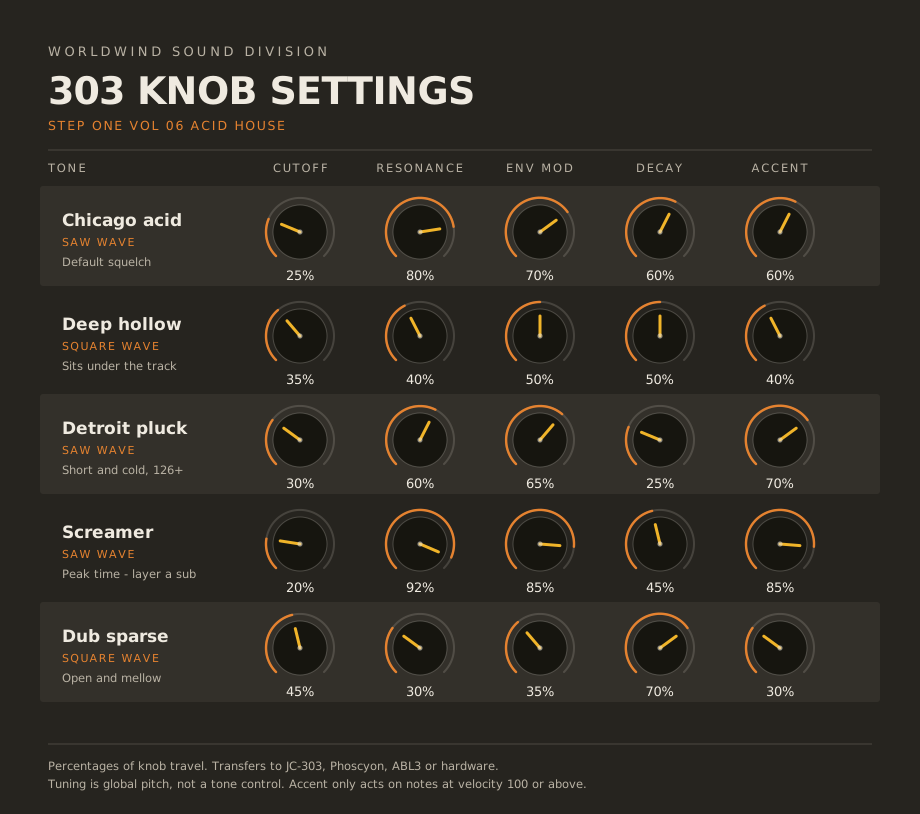
The knob chart
Five starting points, given as percentages of knob travel so they carry across JC-303, Phoscyon, ABL3 or real hardware. This sheet ships inside the pack as an SVG you can open full size.